UCLA Japan Alumni Association |
|||||||||||
 |
 |
||||||||||
|
|||||||||||
|
今後予定のイベント(Upcoming Events)★Westwood Reunion 2019 with Centennial Celebration(2019年8月28日)【案内中】 ★Westwood Reunion 2018(2018年7月3日)【終了】 ★Tokyo New Bruin Send-off 2018(2018年7月8日)【終了】 ★Entrepreneurship Lecture by Professor George Abe(2017年8月4日)【終了】 ★Tokyo New Bruin Send-off 2017(2017年7月22日)【終了】 ★Westwood Reunion 2017(2017年6月30日)【終了】 ★The 2016 UCLA Global Forum and Reception in Tokyo(2016年9月30日)【終了】 ★Westwood Reunion 2016(2016年6月16日)【終了】 ★黒川清教授による講演会「規制の虜」(2016年5月27日)【終了】 ※詳細はスクロールダウンしてご確認下さい。 Westwood Reunion 2019 with Centennial Celebration (2019年8月28日(水))
今年もChancellor Dr. Gene D. Blockご夫妻をお招きし、Westwood Reunion 2019を開催します。 イベントの詳細、第2部の参加申込み&懇親会チケット購入、不参加の連絡は8/22(木)までにこちらから! (※上記リンク先の閲覧にはパスワード「ucla」の入力が必要です。) ★日時:2019年8月28日(水)16時半~21時半 東京都千代田区丸の内1-1-1 MAP TEL: 03-3211-5211 ★スケジュール: 【第1部:センテニアル・イベント】(by UCLA本校 主催) 16:00 - 受付開始 16:30 - 18:00 センテニアル・イベント(無料@2階「葵の間」) 【第2部:Westwood Reunion 2019】(by UCLA日本同窓会 主催) 17:30 - 受付開始 18:00 - 18:30 年次総会(無料@2階「萩の間」) 18:30 - 19:00 カクテルタイム(懇親会参加者のみ。自由にご歓談@2階「ホワイエ」) 19:00 - 21:30 懇親会(着席ディナー@2階「葵の間」) ★参加費(18時半以降): 12,000円: Bruins(当日40代以上) 10,000円: Young Bruins(当日30代) 5,000円: Young Bruins(当日20代以下) 12,000円: UCLA外のゲスト イベントの詳細、第2部の参加申込み&懇親会チケット購入、不参加の連絡は8/22(木)までにこちらから! (※上記リンク先の閲覧にはパスワード「ucla」の入力が必要です。) ※UCLA本校主催のセンテニアル・イベント(第1部)の詳細と参加申込みは別途こちらから! 皆様のお越しをお待ちしています!!!
【終了】Westwood Reunion 2018 (2018年7月3日(火))Chancellor Dr. Gene D. Blockご夫妻をお招きしてWestwood Reunion 2018を開催します。 イベントの詳細、参加申込み&チケット購入、不参加の連絡は6/26(火)までにこちらから! (※上記リンク先の閲覧にはパスワード「ucla」の入力が必要です。) ★日時:2018年7月3日(火)18:00~21:30 東京都港区六本木6-10-3 MAP TEL: 03-4333-1234 ★スケジュール: 17:30 - 受付開始 18:00 - 18:30 年次総会(無料) 18:30 - 19:00 カクテルタイム(ご自由にご歓談下さい) 19:00 - 21:30 懇親会(着席フルコースディナー) ★参加費(18時半以降): 12,000円: Bruins(当日40代以上) 10,000円: Young Bruins(当日30代) 5,000円: Young Bruins(当日20代以下) 12,000円: UCLA外のゲスト イベントの詳細、参加申込み&チケット購入、不参加の連絡は6/26(火)までにこちらから! (※上記リンク先の閲覧にはパスワード「ucla」の入力が必要です。) 皆様のお越しをお待ちしています!!!
【終了】Tokyo New Bruin Send-off 2018(2018年7月8日(日))UCLA Alumni Affairs and UCLA Japan Alumni Association and are honored to host this New Bruin Send-off to welcome incoming students and families, and connect UCLA alumni to the local Bruin network. Whether you're a student, alumnus, family member or friend of the University – there's something for everyone at the New Bruin Send-off! You can participate in this event by e-mailing us at info@uclajapan.gr.jp ASAP. Tokyo New Bruin Send-off 2018が、来る7月8日(日)に東京で開催されます。参加申込みは、info@uclajapan.gr.jpにお願いします。 今年のUCLA新入生(New Bruins)や留学生、同窓生、UCLAに興味のある方、そのご家族やご友人の方々等、お気軽にご参加下さい。 ★日時:2018年7月8日(日)12:00~16:00 ※場所の詳細は、申込みの受付後追ってお知らせします。 ★参加費:無料 ※詳細、及びお申込み(RSVP)につきましては、info@uclajapan.gr.jpにご連絡下さい。 【1】新入生(New Bruins)及びご家族の皆様へ 日本同窓会は、皆様をSend-offパーティにご招待申し上げます。我々は皆様を同窓会一員としてお迎えいたします。 ご家族やお友達を誘いの上、ご参加ください。 【2】同窓生及びUCLAにご興味ある方へ 同窓生、及びUCLAにご興味ある方は、是非ともSend-offパーティにご参加ください。 参加予定数に対し、相当量のピザ、寿司、スナック類、及びお飲物(ビール、酎ハイ、ソフトドリンク等)をご用意する予定です。ただ、送り出す側のご参加者は、出来れば1品お持ち寄り下さるとありがたいです。 皆様のお越しをお待ちしています!!! ★Date/Time:Sunday, July 8, noon - 4pm ※You will be informed of detailed info after your registration! ★Fees:Free ※For more details and RSVP, please e-mail us at info@uclajapan.gr.jp . 【1】To New Bruins and their family members UCLA Japan Alumni Association would like to welcome and invite all of incoming students (New Bruins) and their family members to the Send-off Party.) 【2】 To UCLA Alumni and those interested in UCLA UCLA Japan Alumni Association would like UCLA Alumni and those interested in UCLA to participate in this event to send off New Bruins. We are planning to prepare pizza, sushi, snacks, and some drink (including beer and soft drink), but it might be not enough for all party comers. We'd appreciate it if you could bring some stuff to make it a potluck-style party. Thank you. 【終了】Entrepreneurship Lecture by Professor George Abe(2017年8月4日(金))Professor George Abe, a lecturer at the UCLA Anderson School, will give us an updated view on entrepreneurship in Japan and in the US.
The lecture will be conducted in English, and followed by a networking opportunity with the professor and Anderson School alumni including entrepreneurs.
Alumni/students of the Anderson School and UCLA, their friends, and those interested in UCLA are all welcome to attend. ★Date/Time:Friday, August 4, 7pm - 9pm ★日時:2017年8月4日(金)19時~21時 皆様のお越しをお待ちしています!!! 【終了】Tokyo New Bruin Send-off 2017(2017年7月22日(土))The Tokyo New Bruin Send-off will be held on Saturday, July 22, 2017. You can participate in this event by e-mailing us at info@uclajapan.gr.jp ASAP. Tokyo New Bruin Send-offが、来る7月22日(土)に東京で開催されます。既に約40名の方より参加申込みのお申し出があります。申込みは、info@uclajapan.gr.jpにお願いします。 今年のUCLA新入生(New Bruins)や留学生、同窓生、UCLAに興味のある方、そのご家族やご友人の方々等、お気軽にご参加下さい。 ★日時:2017年7月22日(土)12:00~16:00 ※場所の詳細は、申込みの受付後追ってお知らせします。 ★参加費:無料(ポットラック=持ち寄り形式) ※詳細、及びお申込み(RSVP)につきましては、info@uclajapan.gr.jpにご連絡下さい。 【1】新入生(New Bruins)及びご家族の皆様へ 日本同窓会は、皆様をSend-offパーティにご招待申し上げます。我々は皆様を同窓会一員としてお迎えいたします。 ご家族やお友達を誘いの上、ご参加ください。 【2】同窓生及びUCLAにご興味ある方へ 同窓生、及びUCLAにご興味ある方は、是非ともSend-offパーティにご参加ください。 参加予定数に対し、相当量のピザ、寿司、スナック類、及びお飲物(ビール、酎ハイ、ソフトドリンク等)をご用意する予定です。 しかしながら、送り出す側のご参加者は、出来れば1品お持ち寄り下さるとありがたく、ポットラック形式で行いたいと考えています。 皆様のお越しをお待ちしています!!! ★Date/Time:Saturday, July 22, noon - 4pm ※You will be informed of detailed info after your registration! ★Fees:Free (Potluck) ※For more details and RSVP, please e-mail us at info@uclajapan.gr.jp . 【1】To New Bruins and their family members UCLA Japan Alumni Association would like to welcome and invite all of incoming students (New Bruins) and their family members to the Send-off Party.) 【2】 To UCLA Alumni and those interested in UCLA UCLA Japan Alumni Association would like UCLA Alumni and those interested in UCLA to participate in this event to send-off New Bruins. We are planning to prepare pizza, sushi, snacks, and some drink (including beer, and soft drink), but it might be not enough for all party comers. We'd appreciate it if you could bring some stuff to make it a potluck-style party. Thank you. 【終了】Westwood Reunion 2017 (UCLA in Tokyo)(2017年6月30日(金))今年もChancellor Dr. Gene D. Blockをお招きしてWestwood Reunion (UCLA in Tokyo)を開催します。 今回は、Terasaki Center25周年記念イベントでもあり、また、「同窓生の縦軸(異なる世代間の繋がり)と横軸(同じ世代間での繋がり)の両方を広げよう」という遠山友寛新会長によるスローガンに基づき、『着席式のディナー』による会合となります。 着席式のディナーにつきまして、ご出席のお申込み及び参加費の納入をは6月23日(金)までにお願いします。ご欠席の方も、ご欠席の回答と情報の登録をお願い致します。 UCLA日本同窓会では「同窓生」は卒業生に限定されておらず、UCLAに在籍されていた方すべて(在籍生、教員、研究員、Extensionなど)を含みます。是非お知り合いの同窓生に本イベントをお知らせいただき、お気軽にご参加下さい。 イベントの詳細、参加申込み&チケット購入、不参加の連絡は6/23(金)までにこちらから! (※上記リンク先の閲覧にはパスワード「ucla」の入力が必要です。) ★日時:2017年6月30日(金)18:00~21:30 東京都港区六本木6-10-3 MAP TEL: 03-4333-1234 ★スケジュール: 18:00 - 18:20 年次総会(無料) 18:20 - 19:10 The 2017 UCLA Global Forum in Tokyo(無料) 19:10 - 21:30 レセプション&ディナー(着席フルコースディナー) ★参加費(19時以降): 12,000円: Bruins(40代以上) 8,000円: Young Bruins(30代) 5,000円: Young Bruins(2 0代以下) 12,000円: UCLA外のゲスト ※申込み&購入期限は6/23(金)まで ※YoungBruins割引は、参加費を期限内に納入された方のみ イベントの詳細、参加申込み&チケット購入、不参加の連絡は6/23(金)までにこちらから! (※上記リンク先の閲覧にはパスワード「ucla」の入力が必要です。) 皆様のお越しをお待ちしています!!!
【終了】The 2016 UCLA Global Forum and Reception in Tokyo 『UCLA総長 講演会』(2016年9月30日(金))(※English follows Japanese.) 日時:2016年9月30日(金)午後7時~午後9時 (開場:午後6時30分) 場所:日本橋ライフサイエンスハブ https://www.nihonbashi-lifescience.jp/ 〒103-0022 東京都中央区日本橋室町1-5-5 室町ちばぎん三井ビルディング8階 スケジュール(予定): ・開会の挨拶(7時~7時5分) ・Chancellor Blockの講義(7時5分~7時35分) ・Q&A(7時35分~7時45分) ・UCLA及びUCLAジャパンセンターの説明(7時45分~8時) ・懇親会(軽食・ドリンク付き)(8時~9時) また、ご参加につきましては、メールでも受け付けております。 info@uclajapan.gr.jpまで、(1)お名前、(2)メールアドレス、(3)簡単な所属先(任意)、(4)UCLA関係者の場合は「卒業年・所属学科」などを、関係者ではない方は「一般」と、お知らせ下さいますようお願い申し上げます。 【English Announcement】 Date:Friday, September 30, 2016 Fee:FREE Place:Nihonbashi Life Science Hub https://www.nihonbashi-lifescience.jp/en/ Muromachi Chibagin Mitsui Building, 8th Floor, 1-5-5, Nihombashi-muromachi, Chuo-ku, Tokyo 103-0022 Timeline(Plan): ・Greetings by MC (7pm - 7:05pm) ・Lecture by Chancellor Block (7:05pm - 7:35pm) ・Q&A (7:35pm - 7:45pm) ・Presentation on UCLA & UCLA Japan Center (7:45pm - 8pm) ・Networking Reception (w/ drinks & snacks)(8pm - 9pm) Or, we also accept your participation by e-mail. Please e-mail us at info@uclajapan.gr.jp to inform us of (1) your name, (2) your e-mail address, (3) your affiliation (optional), (4) whether you are related to UCLA or not. If you are related to UCLA, please provide your UCLA information (graduation year, department, degree, etc.)
【終了】Westwood Reunion & General Meeting 2016(2016年6月16日(木))昨年11月の年次総会にて承認されましたが、今後はUCLA本校から要人の来日が多い 5~7月に年次総会を開催することになりました。今年はChancellor Dr. Gene D. Blockをお招きしての会となります。 UCLA日本同窓会では「同窓生」は卒業生に限定されておらず、UCLAに在籍されていた方すべて(在籍生、教員、研究員、Extensionなど)を含みます。是非お知り合いの同窓生に本総会をお知らせいただき、お気軽にご参加下さい。※【満員御礼】事前の参加登録者しか参加できません。 日時:2016年6月16日(木)18:00開場 【満員御礼】参加の受付を締め切りました! 参加登録者しか参加できません。キャンセル待ち希望はinfo@uclajapan.gr.jpまで。参加登録者が参加できなくなった場合の連絡もお願いします。 皆様のお越しをお待ちしています!!!
【終了】黒川清教授による講演会「規制の虜」(2016年5月27日(金))
UCLA日本同窓会 会長 政策研究大学院大学客員教授 日本医療政策機構 代表理事 GHIT(公益社団法人グローバルヘルス技術振興基金)代表理事・会長 日時:2016年5月27日(金)19:00開場
|
||||||||||
Copyright(C) 2012 UCLA Alumni Association, All rights reserved. |
|||||||||||






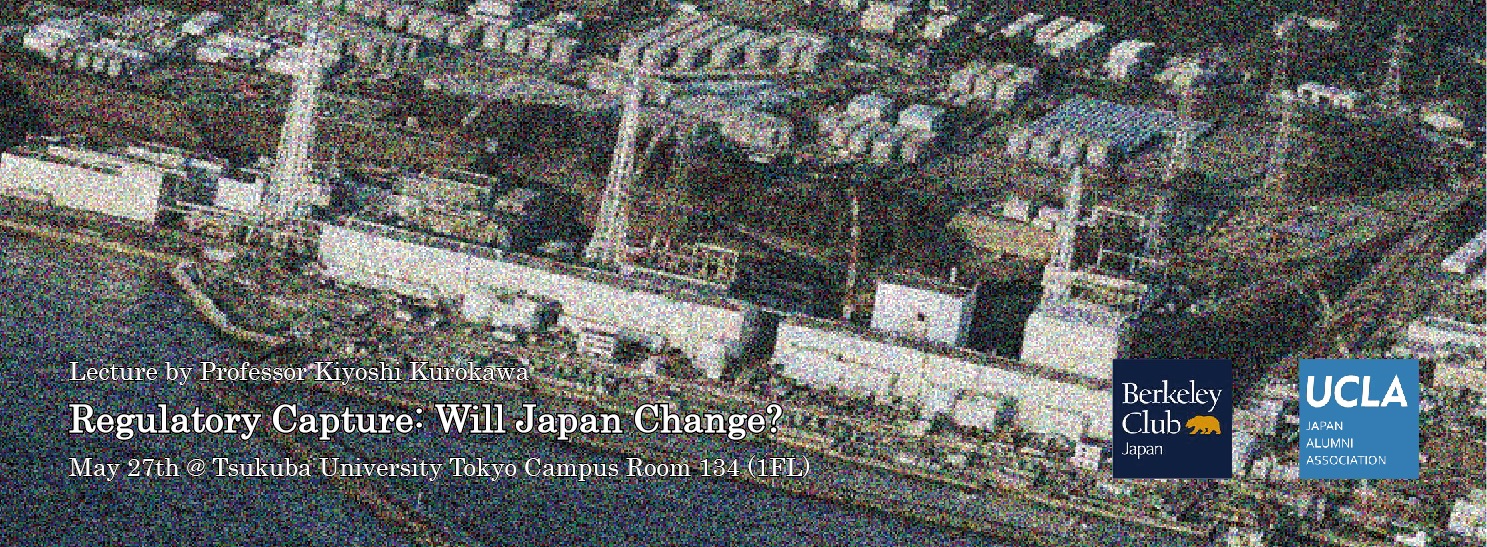 この度、UCLA日本同窓会はUCB日本同窓会”知の広場”と共催で、筑波大学協力のもと、元国会福島原発事故調査委員会委員長であり、又UCLA日本同窓会の会長であられます黒川清先生を招き、福島第一原子力発電所事故に対する日本社会の姿勢と世界の反応について講演していただく機会を設ける運びとなりました。今回のイベントは同窓生だけでなく広く参加を募集しております。お友達、御同僚を御誘いの上、是非ご参加下さい。
福島第一原発の事故から5年。日本はこの事故から何を学んだのでしょう?
国会事故調委員長を務められた黒川清先生は今年3月に出版されました著書”規制の虜”でこの大事故の風化を懸念し、又、このような状況をもたらしている日本社会の現状に警告を発しておられます。「福島第一原発事故によって日本の統治機構の問題が露わにされたにもかかわらず尚変わる兆しを見せない日本の中枢を世界は奇異の目で見つめ不信感を募らせている。この事故を機に、日本は変われるのか?」 先生はそう問いながら、国会事故調のプロセスと事故調の活動や報告書に対する日本社会と世界の反応を説明・対比し、これらをどう捉えるかは読者に託しています。黒川先生は私達に”自分で考える”事を求めておられるのです。
皆様、この講義を機会に一緒に考えてみませんか? 当日は筑波大学の学生も交え、皆様と活発な意見交換ができればと考えております。
黒川先生の著書であります”規制の虜”は3月10日に講談社より出版されました。
この度、UCLA日本同窓会はUCB日本同窓会”知の広場”と共催で、筑波大学協力のもと、元国会福島原発事故調査委員会委員長であり、又UCLA日本同窓会の会長であられます黒川清先生を招き、福島第一原子力発電所事故に対する日本社会の姿勢と世界の反応について講演していただく機会を設ける運びとなりました。今回のイベントは同窓生だけでなく広く参加を募集しております。お友達、御同僚を御誘いの上、是非ご参加下さい。
福島第一原発の事故から5年。日本はこの事故から何を学んだのでしょう?
国会事故調委員長を務められた黒川清先生は今年3月に出版されました著書”規制の虜”でこの大事故の風化を懸念し、又、このような状況をもたらしている日本社会の現状に警告を発しておられます。「福島第一原発事故によって日本の統治機構の問題が露わにされたにもかかわらず尚変わる兆しを見せない日本の中枢を世界は奇異の目で見つめ不信感を募らせている。この事故を機に、日本は変われるのか?」 先生はそう問いながら、国会事故調のプロセスと事故調の活動や報告書に対する日本社会と世界の反応を説明・対比し、これらをどう捉えるかは読者に託しています。黒川先生は私達に”自分で考える”事を求めておられるのです。
皆様、この講義を機会に一緒に考えてみませんか? 当日は筑波大学の学生も交え、皆様と活発な意見交換ができればと考えております。
黒川先生の著書であります”規制の虜”は3月10日に講談社より出版されました。